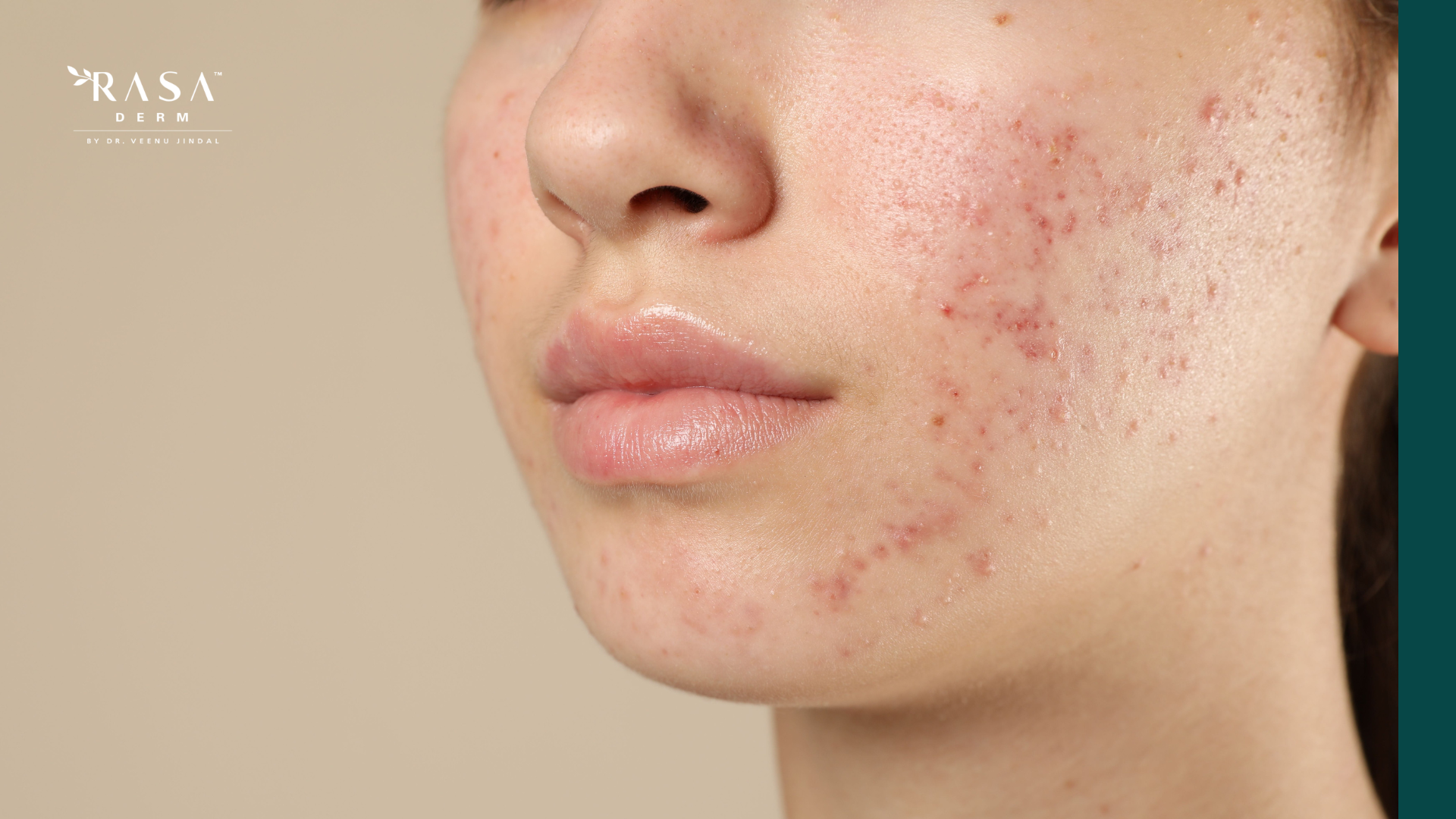
One of the most common misconceptions I encounter in clinic is patients using “acne scars” and “acne marks” interchangeably and then feeling frustrated when a treatment that was meant for one doesn’t touch the other.
They look similar at first glance. Both show up after a breakout has cleared. Both make people reach for the same search terms and the same over-the-counter products.
But clinically, they are two very different things, sitting in two different layers of skin, and they respond to completely different treatments.
Getting this distinction right is, in my experience, the single biggest factor in whether a patient’s post-acne treatment actually works or ends up being months of effort with disappointing results.
What’s the Difference Between Acne Scars and Acne Marks?
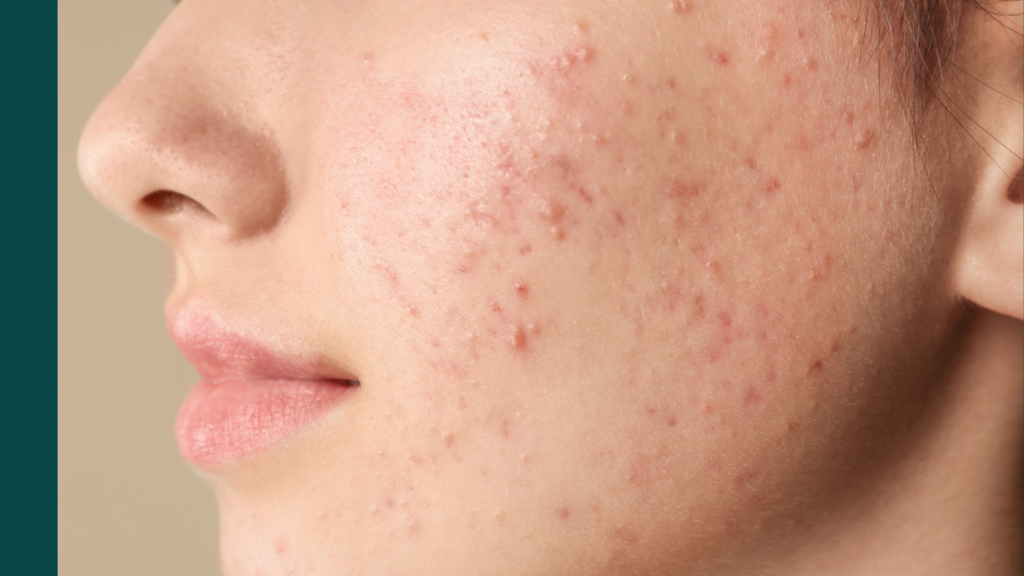
- Acne marks, also called post-acne marks or post inflammatory hyperpigmentation are flat, discoloured patches left behind after a pimple heals. They can appear pink, red, purple, or brown depending on your skin tone, and they sit entirely within the pigment layer of the skin. There’s no textural change, no depression, no raised tissue, just colour.
- Acne scars, on the other hand, involve actual structural damage to the skin. When inflammation from a breakout is severe enough to damage collagen during the healing process, the skin doesn’t rebuild itself perfectly. This shows up as textural change indentations, pitting, or in some cases raised, thickened tissue.
The simplest way I explain it to patients: run your finger over the area with your eyes closed. If you feel a change in texture, that’s a scar.
If the skin feels completely smooth but looks discoloured, that’s a mark. It sounds almost too simple, but it’s genuinely the most reliable first check.
Why This Distinction Changes Everything About Treatment
Acne marks are a pigmentation problem. They fade with time on their own in many cases, and they respond well to treatments that target melanin and accelerate skin turnover topical actives, chemical peels, and lower-intensity laser or light treatments.
Acne scars are a structural problem. No amount of pigment-focused treatment will fill in a depression or resurface pitted skin, because there’s no excess pigment to correct the issue is missing or disorganised collagen.
Scars need treatments that stimulate genuine tissue remodelling: things like laser resurfacing, microneedling, or collagen-stimulating injectables, depending on the scar type.
This is exactly why I see so many patients who’ve spent months on brightening serums or pigmentation-focused treatments for what is actually textural scarring the marks might fade slightly, but the underlying texture never changes, because the treatment was never built to address it.
And the reverse happens too: patients using aggressive resurfacing treatments on marks that were pigment-only and would have responded better, and faster, to a gentler, pigment-targeted approach.
Understanding Post Inflammatory Hyperpigmentation
Post inflammatory hyperpigmentation, or PIH, deserves its own explanation because it’s often the most misunderstood part of this whole picture.
When skin experiences inflammation from acne, but also from picking, sun exposure, or aggressive extractions melanocytes can go into overdrive as part of the healing response, depositing excess pigment in the area.
This is far more common and far more pronounced in melanin-rich skin, which is why PIH is such a frequent concern in Indian skin specifically, often outlasting the acne itself by months.
The good news is that PIH, left alone, does typically fade over time usually anywhere from 3 to 24 months depending on depth and skin tone.
The less good news is that most people don’t want to wait two years, and certain habits (unprotected sun exposure, picking at the area, using irritating actives) can prolong or worsen it significantly.
This is where targeted acne scar treatment protocols make a real difference not by forcing pigment out artificially, but by accelerating the skin’s own turnover and calming the inflammatory cycle that keeps producing more pigment.
What Acne Scars on the Face Actually Look Like
Acne scarring isn’t one uniform thing, it falls into a few recognisable categories, and identifying which type (or combination) you have determines the treatment approach entirely:
- Ice pick scars are narrow, deep, and pitted they look almost like small puncture marks and are among the hardest scar types to treat because of their depth.
- Boxcar scars are broader, with sharply defined edges and a shallower depression often described as looking like chickenpox scarring.
- Rolling scars create a wave-like, uneven texture across the skin because of tethering beneath the surface, rather than a single defined edge.
- Hypertrophic or keloid scars are raised rather than depressed, forming when the skin overproduces collagen during healing rather than too little.
Most patients I see have a combination of two or three of these types simultaneously, which is exactly why an in-person assessment matters more than trying to self-diagnose from what you can see with the naked eye treating a rolling scar the way you’d treat an ice pick scar simply won’t get you the result you’re expecting.
Laser Treatment for Acne Scars: What It Can and Can’t Do
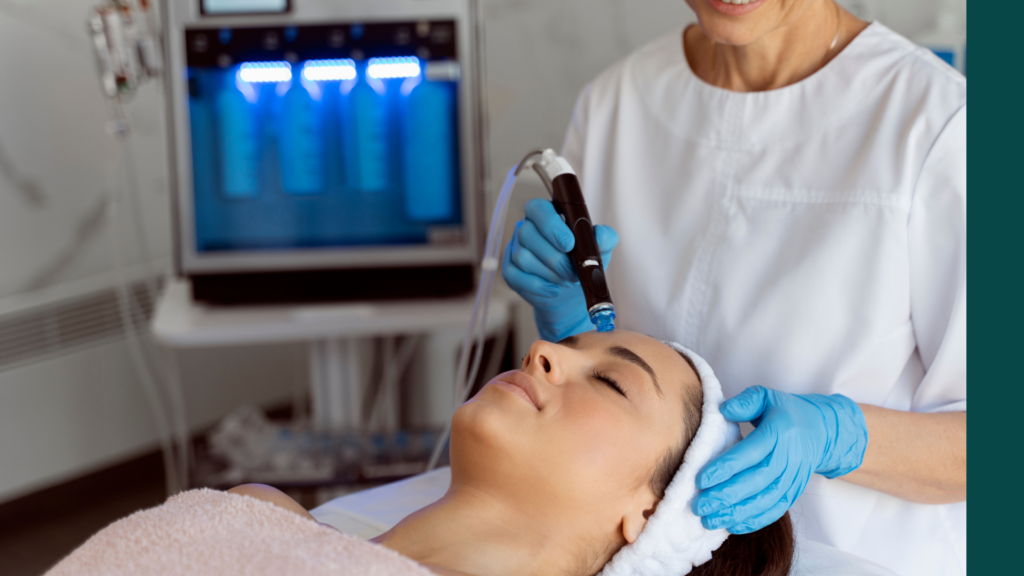
Laser treatment is one of the most effective tools we have for genuine acne scar removal, but which laser, and how it’s used, needs to match the scar type.
Fractional resurfacing lasers work by creating controlled, microscopic zones of injury in the skin, which triggers the body’s natural collagen remodelling process genuinely rebuilding structure rather than masking it.
This is highly effective for boxcar and rolling scars, and, with the right depth settings, can meaningfully soften ice pick scarring too.
For marks rather than scars, gentler laser toning or light-based treatments work by targeting excess pigment directly, without needing to trigger the deeper remodelling response that scar treatment requires.
Using a scar-focused, more aggressive laser setting on pigment-only marks is unnecessary and can actually prolong healing without adding any real benefit.
This is precisely why I always start with a proper diagnosis before recommending a laser protocol the treatment that works beautifully for one patient’s scarring can be the wrong choice entirely for another patient’s marks, even when the two conditions look deceptively similar in the mirror.
Building the Right Acne Scar Treatment Plan
In clinic, I typically build a combined approach rather than relying on a single modality, because most patients are dealing with both marks and scarring at once:
- For active pigmentation (marks): topical depigmenting agents, chemical peels, and gentle laser toning to accelerate fading
- For textural scarring: fractional laser resurfacing, microneedling with radiofrequency, or collagen-stimulating treatments depending on scar depth and type
- For prevention going forward: daily SPF (inflammation and pigmentation both worsen significantly with UV exposure), avoiding picking or extracting, and getting active acne under control early since new marks and scars are far easier to prevent than to treat after the fact
The timeline for a full treatment plan typically spans several months, since collagen remodelling is a genuinely gradual biological process but patients who go in understanding whether they’re treating marks, scars, or both tend to see far more consistent, satisfying results than those chasing a single quick fix for what’s actually two different conditions.
The Bottom Line
If there’s one thing worth taking away here: not all post-acne skin is the same, and treating it as if it is wastes time, money, and patience.
Acne marks are about pigment. Acne scars are about structure. Getting an accurate read on which one or which combination you’re actually dealing with is what determines whether your next treatment finally gets you the results you’ve been hoping for.