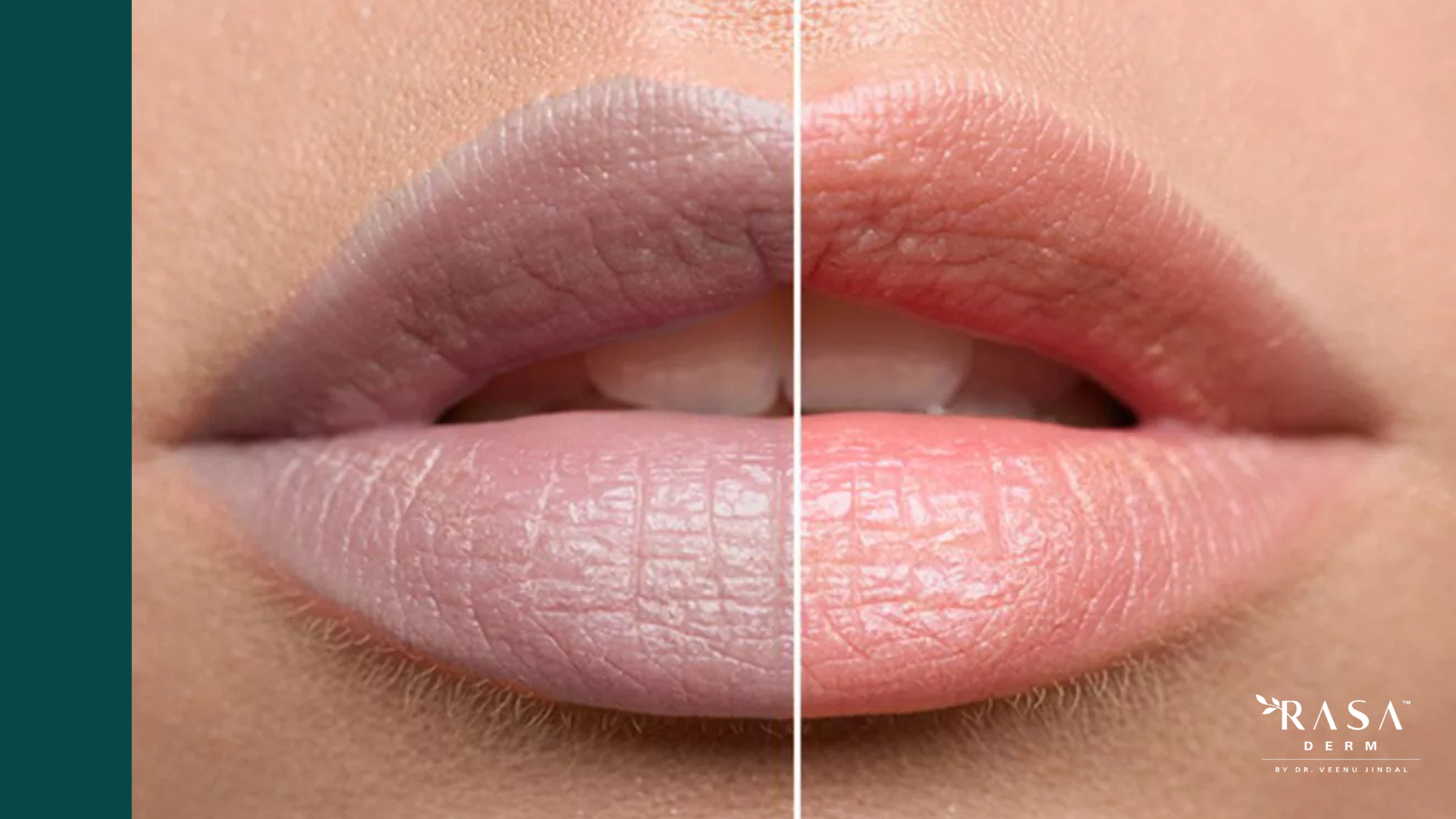
Dark or uneven lips are one of the most searched skin concerns among Indian women and men — and for good reason. Whether it’s years of sun exposure, hormonal changes, smoking, or simply genetics, lip pigmentation can quietly dull what should be one of your most expressive features.
The internet is full of home remedies promising lighter lips overnight. And while some have merit, they rarely deliver the precision, longevity, or safety that a clinically administered lip pigmentation treatment can.
At RasaDerm, Dr. Veenu Jindal’s luxury dermatology and aesthetics clinic in Delhi, we see patients every week who have tried the DIY route — and finally want real results.
This guide breaks down both sides honestly: what home remedies can and cannot do, what professional lip pigmentation treatments actually involve, and how to choose the right path for your skin.
Quick Answers: Common Questions About Lip Pigmentation
Search engines — and people — often ask these questions first. Here are direct answers before we go deeper.
1. What is the best treatment for lip pigmentation?
The most effective options depend on the cause and severity. For mild pigmentation, a professional lip peel or Lip Booster treatment works well. For moderate-to-deep pigmentation, Q-Switch laser treatment or ClearLift Pro laser delivers measurable lightening. Advanced cases may benefit from a combination protocol designed by a dermatologist.
2. Can lip pigmentation be permanently removed?
Pigmentation can be significantly reduced and in many cases completely resolved with the right professional treatment. However, maintenance is important — sun exposure, smoking, and hormonal fluctuations can cause recurrence. A dermatologist-designed aftercare plan is essential.
3. Do home remedies work for dark lips?
Some home remedies can mildly brighten lips over time, but they work slowly and superficially. They are not effective for deep pigmentation, post-inflammatory hyperpigmentation, or conditions like smoker’s lip. Results are also inconsistent and harder to sustain.
4. Is laser treatment for lip pigmentation safe?
Yes — when performed by a qualified dermatologist. At RasaDerm, Q-Switch laser and ClearLift Pro treatments are administered under Dr. Veenu Jindal’s supervision with strict protocols for skin-type-specific settings, especially for Indian skin tones.
5. What causes dark lips?
The most common causes include prolonged sun exposure without SPF lip protection, smoking, frequent lip licking, low-quality lip products with chemical dyes, hormonal changes, nutritional deficiencies (iron, B12), dehydration, and genetics.
Understanding Lip Pigmentation: What’s Actually Happening in Your Skin
Lip skin is structurally different from the rest of your face — it’s thinner, has fewer oil glands, and lacks the stratum corneum layer that protects other skin from UV and environmental damage. This makes it significantly more susceptible to pigmentation.
Melanin, produced by melanocytes, is responsible for skin and lip colour. When melanocytes become overactive — whether due to UV exposure, inflammation, or hormonal stimulus — they deposit excess melanin, creating visible darkening. The location of that excess melanin matters: pigmentation sitting in the surface epidermis responds faster to treatment than deeper dermal pigmentation.
Understanding the depth and cause of your lip pigmentation is the first step toward choosing an effective treatment — which is exactly why a dermatologist consultation always precedes any treatment at RasaDerm.
Home Remedies for Lip Pigmentation: What the Evidence Says
Home remedies for lip pigmentation range from kitchen staples to beauty folklore. Some have a biological basis; many do not. Here’s an honest look at the most commonly recommended ones.
1. Lemon Juice
Lemon juice contains citric acid and Vitamin C, both of which inhibit melanin synthesis to a degree. Regular application can produce mild brightening over weeks. However, lemon juice is also highly acidic and can cause irritation, dryness, and photosensitivity — particularly on the delicate lip skin. It should never be applied before sun exposure and must be rinsed off thoroughly. The brightening effect is limited to surface-level pigmentation and is barely perceptible on moderate or deep pigmentation.
2. Rose Water and Honey
These are primarily soothing and hydrating ingredients rather than depigmenting agents. They can help if dryness or lip licking is contributing to darkness, but they will not address underlying melanin overproduction. Worth using as part of a lip care routine; not worth expecting pigmentation reversal.
3. Aloe Vera
Aloe vera contains aloesin, a compound that has shown some capacity to inhibit tyrosinase (the enzyme driving melanin production) in research settings. Real-world application on lip pigmentation is mild at best. Aloe vera is safe and soothing, and can complement professional treatment as part of aftercare, but should not be expected to deliver meaningful lightening on its own.
4. Turmeric and Milk
Curcumin in turmeric has well-documented anti-inflammatory and mild skin-brightening properties. Combined with milk (lactic acid), this traditional remedy can provide gentle exfoliation and brightening over time. However, turmeric can temporarily stain skin yellow and its brightening effect is modest — suitable for prevention and maintenance, not treatment.
5. Sugar and Olive Oil Scrub
Physical exfoliation removes dead skin cells and can temporarily make lips look brighter and smoother. It does not, however, address melanin in the skin — only surface dead cells. Over-scrubbing can also damage the lip barrier and worsen pigmentation through inflammation.
6. Coconut Oil
Coconut oil is a popular lip care staple. It moisturises effectively and may have some antioxidant benefit, but it has no meaningful depigmenting action. It is most useful as a supportive ingredient to maintain lip softness before and after treatments.
The honest truth about home remedies for lip pigmentation: they are best understood as supportive habits, not treatments. If your lip pigmentation is mild and caused by dryness or mild sun exposure, consistent use of some of these ingredients alongside broad-spectrum SPF lip protection can make a visible difference over months. If your pigmentation is moderate to significant — especially if it has been present for years or has a specific trigger like smoking or hormones — home remedies will not be enough.
Professional Lip Pigmentation Treatments: What Works and How
Professional lip pigmentation treatment goes beyond surface brightening. When a dermatologist treats lip pigmentation, the goal is to target melanin at its source — reducing overactive melanocytes, clearing existing pigment deposits, and stimulating healthier, more even skin cell turnover. At RasaDerm, we use a combination of non-invasive and minimally invasive options tailored to each patient’s pigmentation type, depth, and skin tone.
Lip Peel
A clinical lip peel is a medical-grade chemical exfoliation procedure specifically formulated for the delicate lip area. Unlike facial chemical peels which use higher acid concentrations, lip peels are calibrated to work gently on thinner lip skin. Active ingredients may include kojic acid, lactic acid, mandelic acid, or phytic acid — chosen based on your pigmentation type.
A lip peel works by accelerating cell turnover, clearing pigmented superficial skin cells, and mildly inhibiting melanin production. Results are typically visible within a week as the skin sheds and reveals a noticeably lighter, smoother lip surface. A course of 3–6 sessions spaced 2–4 weeks apart is usually recommended for sustained results.
Lip peels are particularly effective for post-inflammatory pigmentation, sun-induced darkening, and mild hormonal pigmentation. They have zero downtime and can be combined with other treatments for enhanced results.
Lip Booster Treatment
The Lip Booster at RasaDerm is a targeted brightening and rejuvenation protocol for the lips — combining depigmenting actives, hydrating elements, and skin-barrier repair in a single session. This treatment addresses pigmentation while also improving lip texture, volume appearance, and overall vitality.
It is ideal for patients who want both pigmentation correction and a plumping, luminous effect without committing to injectable fillers. The Lip Booster can also be used as a maintenance protocol after laser or peel treatment to preserve results and keep lips nourished.
Bacio Lip Booster
For patients where lip appearance is affected not just by pigmentation but also by volume loss, thinning lips, or asymmetry, Bacio Lip Filler offers a precise aesthetic solution. Bacio is a hyaluronic acid-based lip filler technique designed for natural-looking enhancement — subtle volume, defined borders, and improved symmetry without the overfilled look.
While lip filler does not directly treat pigmentation, it is frequently combined with lip peel or laser treatments for patients who want comprehensive lip rejuvenation — addressing both colour and structure. At RasaDerm, Dr. Veenu Jindal performs all injectable treatments herself, ensuring precise and natural outcomes.
Q-Switch Laser for Lip Pigmentation
Q-Switch laser is the gold standard for laser lip pigmentation treatment in dermatology. It delivers ultra-short pulses of targeted light energy at specific wavelengths (typically 1064nm or 532nm) that are selectively absorbed by melanin. The laser energy shatters melanin granules into micro-fragments, which are then naturally cleared by the body’s immune system.
The result is a progressive lightening of pigmented areas over a series of sessions. Q-Switch laser is particularly effective for deeper pigmentation, smoker’s lip, post-inflammatory hyperpigmentation, and long-standing darkening that has not responded to topical treatments.
At RasaDerm, Q-Switch laser treatment for lip pigmentation is customised based on Fitzpatrick skin type — critical for Indian skin, which has a higher melanin density and requires careful parameter adjustment to avoid paradoxical post-inflammatory hyperpigmentation (PIH). Dr. Veenu’s training and clinical precision in laser treatments ensures both safety and efficacy for our patients.
Typical protocol: 4–8 sessions spaced 3–4 weeks apart, depending on pigmentation severity. Some patients see results from the second session onwards.
ClearLift Pro Laser
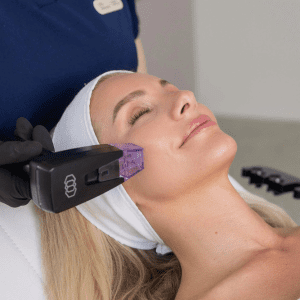
ClearLift Pro is a non-ablative, fractional Q-Switched laser available exclusively at select premium clinics in Delhi, including RasaDerm. Unlike traditional laser treatments that work on the surface, ClearLift Pro delivers energy in a fractional column pattern deep into the dermis — making it especially effective for pigmentation that sits in the deeper skin layers and has been resistant to surface-level treatments.
ClearLift Pro offers a significant advantage for Indian skin: because it is non-ablative (it does not damage the surface), there is minimal risk of post-treatment hyperpigmentation or prolonged recovery. Patients typically experience some redness for a few hours, with no peeling and no significant downtime. This makes it an ideal laser lip pigmentation treatment for patients who cannot afford to have visible skin reactions.
ClearLift Pro also stimulates collagen production in the lip area, improving lip skin quality, reducing fine lines around the mouth, and creating an overall rejuvenation effect beyond just pigmentation correction.
Side-by-Side Comparison: Home Remedies vs Professional Lip Pigmentation Treatments
Effectiveness for mild pigmentation:
- Home remedies — moderate, with consistent use over months.
- Professional treatments — visible results within 1–3 sessions.
Effectiveness for moderate-to-deep pigmentation:
- Home remedies — minimal to none.
- Professional treatments (laser, peel) — significant and measurable reduction.
Speed of results:
- Home remedies — weeks to months, subtle.
- Professional — weeks, visible and progressive.
Safety for Indian skin tones:
- Home remedies — generally safe but risk of irritation with acids.
- Professional — safe when performed by a trained dermatologist with skin-type-specific protocols.
Risk of side effects:
- Home remedies — irritation, dryness, photosensitivity if misused.
- Professional — low when clinically administered; risk of PIH with inexperienced providers.
Longevity of results:
- Home remedies — dependent on daily consistency; no long-term structural change.
- Professional — long-lasting with proper aftercare and maintenance.
How to Choose the Right Approach for Your Lip Pigmentation
Not every case of lip pigmentation is the same, and the right treatment depends on several factors — the cause, the depth, the duration, and your skin type. Here is a general framework:
Start With Home Remedies If:
- Your pigmentation is mild and recent (less than 6 months)
- It is primarily caused by dryness, lip licking, or minimal sun exposure
- You want a preventive and maintenance-focused routine
- You are pairing it with SPF lip protection consistently
Move to Professional Treatment If:
- Your pigmentation has been present for over a year
- Home remedies have not produced visible results in 2–3 months of consistent use
- The darkening is significant, patchy, or concentrated at the lip border
- You are a smoker or ex-smoker with characteristic smoker’s lip pattern
- Hormonal changes (pregnancy, thyroid issues, PCOD) are a contributing factor
- You want fast, reliable, and lasting results
A consultation at RasaDerm includes a detailed assessment of your lip pigmentation — its cause, depth, and the treatment protocol best suited to your skin type and lifestyle. Dr. Veenu Jindal believes in education before treatment: you will understand exactly what is happening in your skin and what results to realistically expect before we begin.
Maintaining Your Results: What to Do After Treatment
Regardless of whether you go the home remedy or professional treatment route, the principles of maintenance are similar — and equally important.
- Always apply a broad-spectrum SPF lip balm before stepping outdoors. UV exposure is the most common cause of pigmentation recurrence.
- Stay hydrated. Dry lips are more prone to darkening and licking-induced inflammation.
- Avoid low-quality lip products with synthetic dyes, heavy fragrances, or petroleum-based fillers that can react with your skin.
- If you smoke, reducing or stopping is the single most impactful step you can take for long-term lip pigmentation improvement.
- Do not pick, scrub, or over-exfoliate. Inflammation = pigmentation.
- Follow your dermatologist’s post-treatment protocol precisely. At RasaDerm, each patient receives a personalised aftercare routine.
Lip Pigmentation Treatment in Delhi: Why Patients Choose RasaDerm
Finding a qualified clinic for lip pigmentation treatment in Delhi requires looking beyond the treatment menu. What matters is the expertise behind the equipment, the protocols designed for Indian skin, and the attention given to each patient as an individual.
Dr. Veenu Jindal, MD Dermatology with an SCE from the Royal College of Physicians, London, brings both international training and deep clinical experience in treating pigmentation across diverse Indian skin tones. RasaDerm operates from two locations — Ashok Vihar and Safdarjung Enclave — offering the full spectrum of lip pigmentation treatments, from clinical lip peels and Lip Booster sessions to Q-Switch laser, ClearLift Pro, and Bacio Lip Filler for comprehensive lip rejuvenation.
Every treatment at RasaDerm begins with a consultation, not a procedure. Because we believe the most important step in treating lip pigmentation is understanding what caused it in the first place.
Ready to Address Your Lip Pigmentation?
Whether your concern is mild sun-induced darkening or long-standing smoker’s lip, the most effective next step is always a professional assessment. RasaDerm offers consultations at both our Delhi clinics — Ashok Vihar and Safdarjung Enclave.
Discover what the right treatment looks like for your skin. Book your consultation with Dr. Veenu Jindal at RasaDerm today.