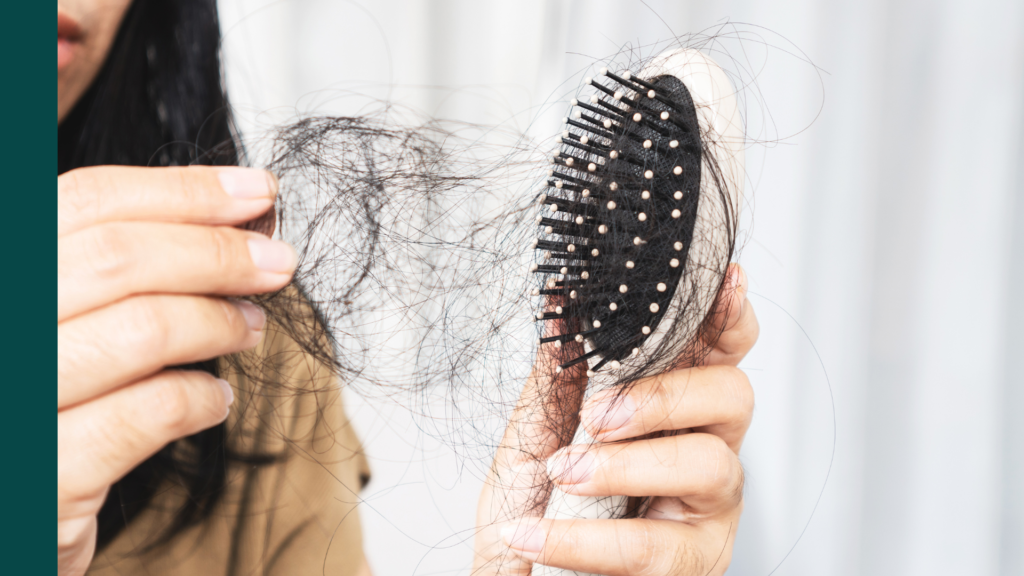
Hair fall can be frustrating, especially when you feel like you have tried everything from hair growth shampoos and supplements to topical serums without seeing noticeable improvement.
While hair fall can have several underlying causes, treatments such as Platelet-Rich Plasma (PRP) and Growth Factor Concentrate (GFC) have gained popularity as dermatologist-led options for supporting hair growth and improving hair density.
Both PRP and GFC use growth factors derived from your own blood to support hair follicle activity. However, they differ in how these growth factors are prepared, concentrated and delivered to the scalp.
So, PRP vs GFC for hair fall: which treatment is better? Are the results different? Is GFC more effective than PRP, and which one should you choose?
Let’s understand the differences, benefits, procedure, expected results and cost considerations to help you make an informed decision.
What Is PRP Hair Treatment?
Platelet-Rich Plasma (PRP) is a regenerative treatment that uses a concentrated portion of your own blood to support hair growth.
Platelets naturally contain growth factors and proteins involved in tissue repair and healing. When concentrated and introduced into the scalp, these growth factors may help create a favourable environment for hair follicles.
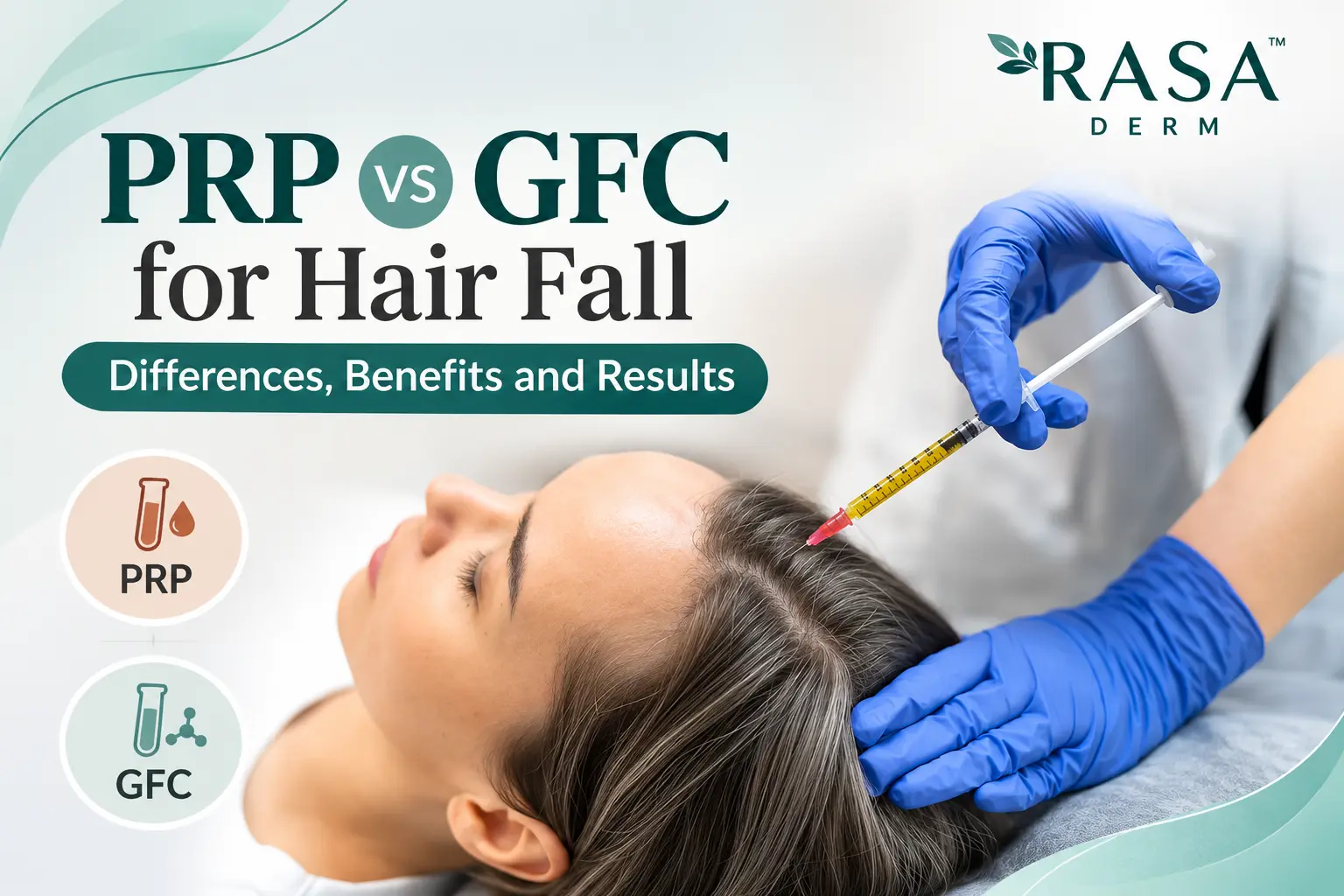
The PRP hair treatment procedure generally involves collecting a small amount of blood from the patient’s arm, which is then processed in a centrifuge to separate its components and obtain platelet-rich plasma.
The prepared PRP is subsequently injected into selected areas of the scalp, particularly areas experiencing thinning or reduced hair density. PRP aims to support existing hair follicles, improve the hair growth environment and potentially increase hair thickness over time.
It is commonly considered for individuals experiencing early-stage androgenetic alopecia (pattern hair loss) and certain types of hair thinning.
What Is GFC Hair Treatment?
Growth Factor Concentrate (GFC) is an autologous regenerative hair treatment that uses growth factors obtained from your own blood.
Unlike conventional PRP, GFC preparation focuses on obtaining a concentrated growth-factor-rich solution from platelets. The processing method is designed to minimise the presence of unwanted blood components and cellular debris in the final preparation.
The GFC hair treatment procedure typically involves collecting a small quantity of blood, which is processed using a specialised preparation system to release and collect growth factors.
The resulting growth-factor concentrate is then administered into areas of hair thinning through small injections. GFC is designed to deliver growth factors that play a role in cellular communication, tissue repair and follicular activity.
Since it is prepared from the patient’s own blood, it is an autologous treatment. However, the quality and composition of the final preparation depend on the processing protocol and equipment used.
PRP vs GFC for Hair Fall: Key Differences
Although both treatments use growth factors derived from your own blood, their preparation techniques and final compositions differ. PRP stands for Platelet-Rich Plasma, while GFC stands for Growth Factor Concentrate.
PRP is prepared through centrifugation, which separates platelet-rich plasma from other blood components. GFC uses specialised processing to obtain a growth-factor-rich preparation.
While PRP contains platelets, plasma and associated growth factors, GFC is designed to deliver concentrated growth factors with fewer cellular components, depending on the preparation system.
Both treatments are administered through scalp injections and generally require multiple sessions. They aim to support follicular activity, improve hair quality and encourage better hair density.
The biggest difference is that PRP delivers platelet-rich plasma containing growth factors, whereas GFC is designed to deliver a growth-factor-rich preparation obtained through a different processing technique.
Neither treatment guarantees hair regrowth, and current clinical evidence does not establish that one is universally superior to the other.
Benefits of PRP for Hair Growth
PRP has been studied for several years as a supportive treatment for androgenetic alopecia and pattern hair loss. The growth factors present in PRP may stimulate dermal papilla cells, which play an important role in regulating the hair growth cycle.
PRP may help improve hair density in individuals with pattern hair loss, particularly when treatment is started early and viable hair follicles are still present.
Some clinical studies have also reported improvements in hair shaft diameter, making thinning hair appear fuller over time.
Since PRP is prepared from the patient’s own blood, it is an autologous treatment and does not involve introducing donor-derived biological material.
A dermatologist may also recommend PRP alongside medical treatments such as topical minoxidil, depending on the underlying cause of hair loss.
Benefits of GFC for Hair Growth
GFC has emerged as another regenerative option for individuals experiencing hair thinning and pattern hair loss. Its preparation technique aims to isolate growth factors that participate in cellular signalling, tissue repair and follicular activity.
Clinical studies have reported improvements in hair count and density following GFC treatment, although larger studies are needed to establish its effectiveness more conclusively.
GFC may also help improve hair shaft thickness by supporting the hair follicle environment in suitable candidates. Like PRP, GFC uses the patient’s own blood, reducing concerns associated with donor-derived biological materials.
Most patients can return to their regular activities shortly after treatment, although temporary scalp tenderness, redness or swelling may occur.
PRP vs GFC Results: Which Gives Better Hair Growth?
This is probably the most important question when comparing PRP vs GFC for hair growth. Both treatments have shown promising results in clinical studies, but outcomes can vary depending on the patient’s hair loss pattern, severity, age, underlying medical conditions and treatment protocol.
A 2026 systematic review comparing PRP and GFC in androgenetic alopecia found that both treatments demonstrated improvements in hair density, thickness and patient satisfaction.
Some studies reported more favourable outcomes with GFC, but the available evidence was insufficient to establish its superiority over PRP.
A comparative clinical study also reported improvements with both treatments, although its relatively small sample size means the findings should be interpreted cautiously.
PRP remains a more extensively studied regenerative option, while GFC is a promising alternative with encouraging early clinical findings. Both may help improve hair density and thickness in selected patients.
Neither treatment can guarantee new hair growth, and the right choice depends on a dermatologist’s assessment rather than popularity or marketing claims.
How Many Sessions of PRP or GFC Are Required?
Both PRP and GFC generally require multiple sessions to achieve and maintain results. The exact number depends on the degree of hair thinning, the underlying diagnosis and how your scalp responds to treatment.
A commonly used PRP protocol involves three to five sessions approximately four weeks apart, while GFC treatment may involve three sessions at similar intervals.
These are indicative protocols rather than fixed prescriptions, and your dermatologist may modify the schedule depending on your condition and response. Maintenance sessions may also be recommended after the initial treatment course.
When Can You Expect Results?
Hair growth is a gradual biological process, so neither PRP nor GFC delivers overnight results. During the first month, the scalp begins responding to treatment, although visible hair regrowth may not be noticeable.
Between two and three months, some patients may start noticing changes in hair shedding and early improvements in hair quality. Between three and six months, improvements in hair density and thickness may become more noticeable.
At six to twelve months, your dermatologist can assess longer-term results and determine whether maintenance or additional treatment is required. Individual responses vary, and these timelines are not guaranteed.
PRP vs GFC Cost: Which Treatment Is More Expensive?
The cost of PRP vs GFC treatment can vary depending on several factors, including the clinic, dermatologist’s expertise, technology and equipment used for preparation, quality of the preparation system and number of sessions required.
GFC may be priced higher than conventional PRP at some clinics because of its specialised preparation system and consumables. However, this is not a universal pricing rule.
Rather than choosing a treatment based solely on cost, consider the dermatologist’s experience, treatment protocol and suitability for your hair loss condition.
Are PRP and GFC Safe for Hair Fall?
Both PRP and GFC are generally well-tolerated when performed by trained medical professionals using appropriate sterile techniques. Since both treatments use your own blood, the risk of an allergic reaction to donor-derived material is avoided.
However, as both involve scalp injections, temporary side effects can occur, including mild pain or discomfort during injections, redness, tenderness, temporary swelling and minor bruising. Rarely, infection or other injection-related complications may occur.
A proper medical assessment is essential before starting treatment, particularly if you have a bleeding disorder, low platelet count, an active scalp infection or other relevant medical conditions.
Who Is an Ideal Candidate for PRP or GFC?
PRP and GFC may be considered for individuals experiencing early-stage male or female pattern hair loss, gradual hair thinning, reduced hair density, hair miniaturisation and certain cases of persistent hair shedding after identifying and addressing the underlying cause.
However, these treatments are not suitable for every type of hair fall. Hair loss due to iron deficiency, thyroid disorders, nutritional deficiencies, hormonal imbalances or telogen effluvium requires an appropriate diagnostic and treatment approach.
Similarly, neither PRP nor GFC can reliably restore hair follicles that have been permanently destroyed in areas of scarring alopecia. A dermatologist may recommend blood investigations, scalp examination and trichoscopy before suggesting a treatment plan.
Can PRP or GFC Be Combined With Other Hair Fall Treatments?
Yes. In selected patients, regenerative treatments may be combined with other evidence-based hair loss therapies. Depending on the diagnosis, your dermatologist may recommend minoxidil, a topical or oral medication that supports hair growth, nutritional correction to address deficiencies such as iron or vitamin deficiencies, and hormonal evaluation when hair loss is associated with hormonal conditions.
Hair GFC or PRP may be recommended as an additional treatment to support hair density and follicular health. However, these treatments should not automatically replace established medical treatments. For pattern hair loss, they are often considered complementary options rather than standalone solutions.
Frequently Asked Questions About PRP vs GFC for Hair Fall
Is GFC better than PRP for hair growth?
Not necessarily. Both treatments have demonstrated promising results in improving hair density and thickness. While some studies suggest favourable outcomes with GFC, there is currently insufficient high-quality evidence to establish that it is better than PRP for everyone. The choice should depend on your hair loss condition and dermatologist’s recommendation.
Does PRP or GFC stop hair fall permanently?
treatment permanently stops hair fall. Results can vary, and ongoing maintenance or medical treatment may be required depending on the underlying cause of hair loss.
Is GFC less painful than PRP?
Both treatments involve small scalp injections, so some discomfort is expected. The level of pain depends on individual sensitivity, injection technique and treatment protocol. Some comparative research has reported lower pain scores with GFC, but this does not mean it is completely painless.
Can women undergo PRP or GFC treatment?
Yes. Both treatments may be considered for women experiencing pattern hair loss and certain types of hair thinning. However, identifying the underlying cause of hair loss is important before proceeding.
How long do PRP and GFC results last?
Results vary between individuals. Since hair loss can be progressive, maintenance treatments and appropriate medical management may be necessary to sustain improvements.
Can PRP and GFC be done together?
They are not routinely required together. A dermatologist may recommend one or the other depending on the patient’s condition, treatment response and clinical requirements.
Final Verdict: PRP or GFC – Which Should You Choose?
When it comes to PRP vs GFC for hair fall, there is no universal winner. PRP is a more established regenerative treatment with a larger body of research, while GFC is a promising alternative that uses a different growth-factor preparation technique.
The best treatment is not necessarily the newest or the most expensive one. It is the one that addresses the underlying cause of your hair loss and is suited to your scalp condition.
At RasaDerm, we believe that effective hair restoration starts with understanding your hair, scalp and individual concerns.
A dermatologist-led consultation can help determine whether PRP, GFC or a combination of medical treatments is appropriate for you. Because healthy hair growth starts with the right diagnosis, not guesswork.