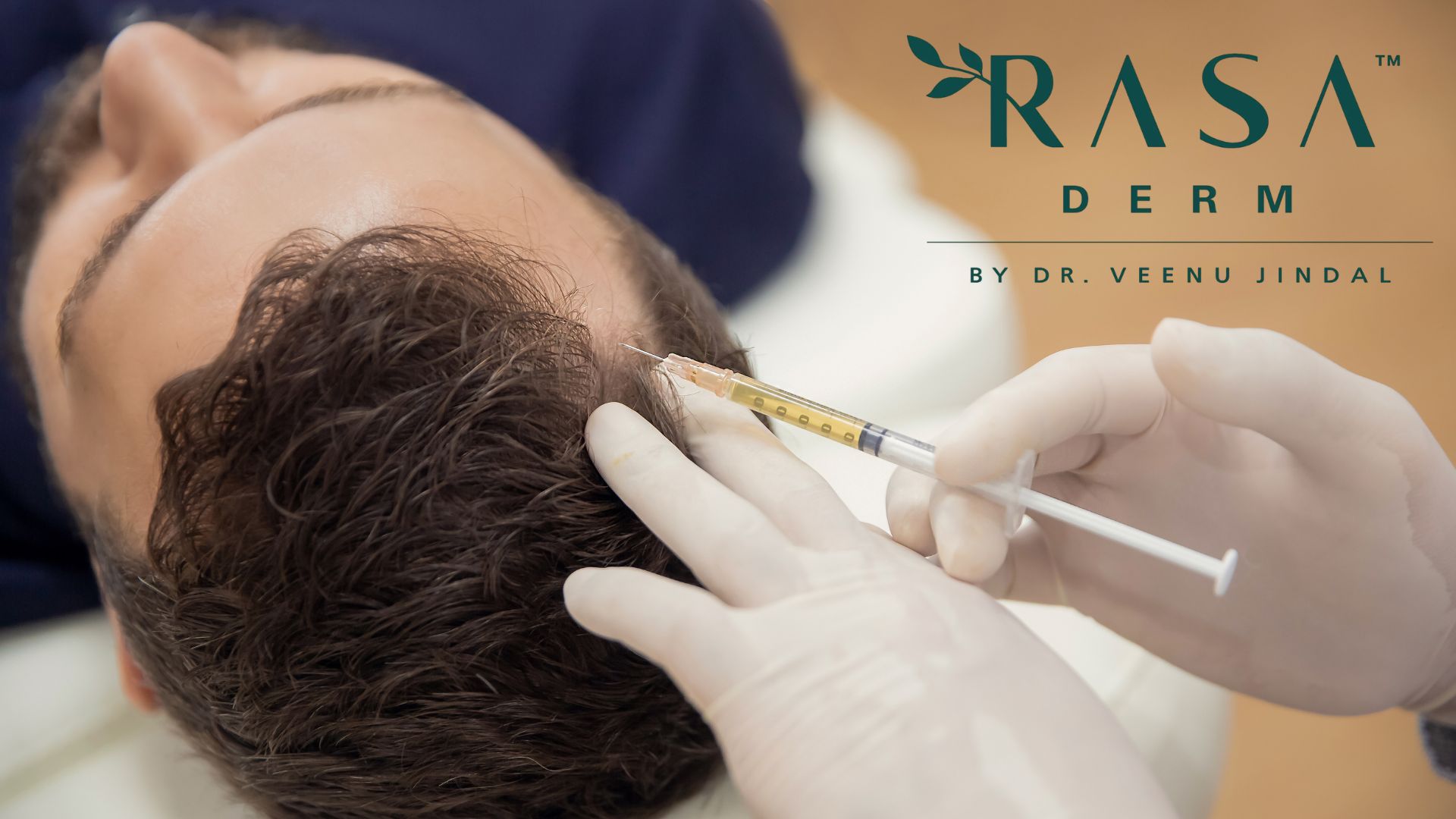
Hair fall is one of those problems that quietly takes up a lot of mental space. You notice it in the shower drain, on your pillow, in the way your parting looks a little wider than it used to. And somewhere along the way, you’ll probably hear about GFC — Growth Factor Concentrate therapy. Maybe from a friend, maybe from a reel, maybe from someone at the clinic.
But with any treatment that sounds a little too promising, the myths tend to pile up just as fast as the curiosity. So let me clear the air. I see patients at RasaDerm every week who come in convinced of things that simply aren’t true about GFC — and I’d rather you walk in here well-informed than walk in expecting magic or, worse, stay away because of something you misread.
Here are seven of the most common myths I hear – and what’s actually going on.
Myth 1: “GFC is just a fancier version of PRP – it’s the same thing”
The Truth:
This is probably the most common misconception. GFC (Growth Factor Concentrate) and PRP (Platelet-Rich Plasma) are both derived from your own blood, yes — but the similarity ends there. PRP is essentially plasma with a concentrated dose of platelets. GFC takes that further.
It’s a purified concentrate of specific growth factors extracted from those platelets — things like PDGF, VEGF, EGF, and IGF — in a highly stable, gel-like preparation. The result? You’re delivering a much higher concentration of active growth factors directly to the scalp, without the red blood cells or other components that don’t contribute to hair regrowth.
Think of it this way: PRP is like the whole fruit; GFC is the extracted, concentrated juice. Both are natural, both come from you — but the potency and purity are different, and that matters when you’re targeting hair follicles at a biological level.
Myth 2: “GFC hair treatment results are permanent”
The Truth:
I wish I could say yes to this one. Hair loss — whether it’s androgenetic alopecia, stress-related shedding, or post-partum fall — has an underlying cause. GFC works beautifully to stimulate dormant follicles, strengthen the existing hair shaft, and slow active shedding.
But it doesn’t alter your genetics. It doesn’t change the hormonal environment if that’s what’s driving your hair loss. So the results are significant and, for most patients, long-lasting with maintenance — but permanent is not the right word. What I usually tell my patients: GFC gives your follicles a strong foundation.
Whether that foundation holds long-term depends on your maintenance protocol and whether the root cause is being addressed alongside. For many people, 2–3 maintenance sessions per year are enough to sustain results. That’s a very different conversation from ‘it doesn’t last’ — it’s more that it requires the same kind of commitment you’d give to any health investment.
Myth 3: “GFC treatment success rate is low – it doesn’t really work”
The Truth:
This myth usually comes from people who tried it somewhere, got inconsistent results, and then generalised. The success rate of GFC treatment is actually well-documented, and clinical data puts meaningful improvement (in hair density, shaft thickness, and reduced shedding) in the 70–85% range for androgenetic alopecia when performed correctly, in appropriate candidates, with the right number of sessions.
The ‘it doesn’t work’ narrative often has context: it was done on someone who wasn’t a suitable candidate to begin with, or they only completed one session, or the preparation quality was substandard. Like almost everything in dermatology, GFC works best when it’s used for the right problem, by the right hands.
I’m candid with every patient I see about whether they’re a good candidate for this before we begin. If GFC isn’t the answer for you, I’ll tell you that.
Myth 4: “GFC is extremely painful”
The Truth:
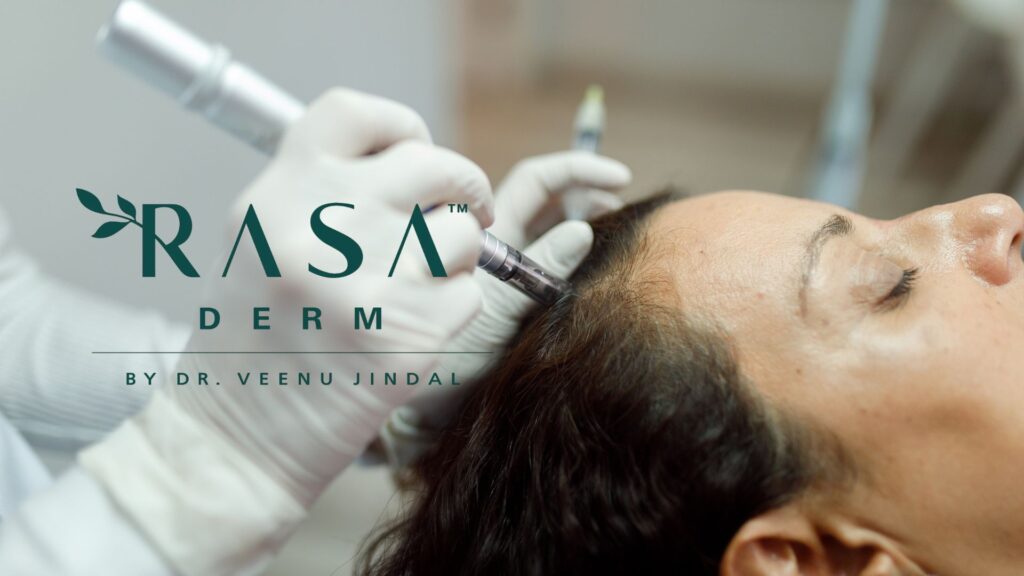
I understand where this comes from — needles in the scalp does not sound comfortable. But let me be precise: the procedure involves micro needling or injections into the scalp, and with proper topical anaesthesia applied beforehand, most patients describe the sensation as mild pricking or pressure — not pain.
The preparation is gel-based, which means it doesn’t cause the burning sensation some patients report with PRP. In my experience, the patients who are most anxious going in are usually pleasantly surprised by how manageable it is. If you have a low threshold for discomfort, tell us before we begin — there’s a lot we can do to make the process easier.
Myth 5: “You’ll see results after just one GFC session”
The Truth:
Hair biology doesn’t work that quickly, unfortunately. The hair growth cycle runs in phases — anagen (growth), catagen (transition), and telogen (rest) — and GFC works by nudging follicles in their resting phase back toward active growth. That shift takes time. Most patients begin to notice reduced shedding within 4–6 weeks of the first session, and visible improvement in hair density typically shows up after a course of 3–4 sessions spaced 3–4 weeks apart. I say this not to lower expectations but to calibrate them honestly.
Patients who understand the timeline are also the patients who stay consistent, and consistent patients are the ones who see the best results.
Myth 6: “GFC is only for men with male pattern baldness”
The Truth:
Not at all. GFC is, if anything, particularly effective for women — especially those dealing with diffuse hair thinning, postpartum hair fall, or the kind of chronic shedding that doesn’t have an obvious cause. Female hair loss is often more diffuse than male pattern baldness, which actually responds well to the way GFC works: it doesn’t need a defined zone to target.
It stimulates across the treated area. I see a significant number of women at RasaDerm who’ve had real results with GFC — many of them had been told elsewhere that their hair loss was ‘just hormonal’ and nothing could really be done. That’s rarely the whole story. Hormones may be a contributing factor, but scalp health and follicle stimulation matter too, and GFC addresses both.
Myth 7: “GFC is unsafe because it’s a new and unproven treatment”
The Truth:
GFC has been studied and used clinically for several years now. The fact that it’s relatively newer than PRP doesn’t mean it’s experimental — it means it’s an evolution. Because it uses your own blood and involves only purified biological components, the safety profile is excellent. There’s no risk of allergic reaction to a foreign substance, no synthetic chemicals involved.
The risk profile largely comes down to the skill of the practitioner and the hygiene protocol of the clinic — which is true of almost any injectable treatment. At RasaDerm, we use a closed-system processing method, which minimises any contamination risk and ensures the concentrate is as pure and stable as possible.
So, Who Is GFC Actually Right For?
GFC tends to work best for patients with:
- Early to moderate androgenetic alopecia (male or female pattern hair loss)
- Diffuse hair thinning without complete follicle death
- Postpartum or stress-related hair fall
- Alopecia areata (in select cases)
- Patients looking to complement or delay hair transplant surgery
It’s not a great fit for patients with advanced baldness where follicles are no longer viable, or those with active scalp infections, certain autoimmune conditions, or very low platelet counts. That’s why a proper consultation matters before any treatment plan is made.
What to Expect at RasaDerm
When you come in for a GFC consultation at RasaDerm, I’ll do a thorough assessment — scalp health, hair density, your history with hair loss, any medications you’re on, your lab reports if relevant. The treatment itself takes about 45 minutes to an hour per session. You can drive yourself home afterward. There’s no real downtime — some patients have mild redness or tenderness at the injection sites for 24–48 hours, but it resolves on its own.
We space sessions 3–4 weeks apart for the initial course, and from there we’ll assess your response and plan maintenance accordingly. Every patient’s protocol is different, which is exactly how it should be.
Quick Answers to What People Are Actually Searching
1. What is GFC hair treatment?
GFC stands for Growth Factor Concentrate. It’s a scalp injection therapy made from your own blood — specifically, a purified concentrate of growth factors extracted from platelets — designed to stimulate dormant hair follicles and improve scalp health.
2. What is the GFC hair treatment success rate?
Clinical studies suggest 70–85% of suitable candidates see meaningful improvement in hair density and reduction in shedding after a complete course of GFC sessions. Results vary depending on the stage of hair loss, candidate selection, and the quality of preparation.
3. Is GFC hair treatment permanent?
No, and it’s important to understand this clearly. GFC produces lasting improvement but is not a permanent cure. Maintenance sessions — typically 2–3 per year after the initial course — help sustain results, especially when the underlying cause of hair loss is also being managed.
4. How many sessions does GFC treatment for hair require?
Most patients need an initial course of 3–4 sessions spaced 3–4 weeks apart. After that, maintenance sessions are recommended based on how well you’ve responded.
5. Does GFC hurt?
With topical anaesthesia, most patients find the discomfort manageable — mild pricking or pressure, not sharp pain. The gel-based formulation also makes it more comfortable than standard PRP injections.
A Final Note
I think the most important thing I can say about GFC is this: it’s not a miracle, and it’s not a scam. It’s a well-researched, biologically sound treatment that, when used correctly and for the right patients, can make a real and visible difference to hair density and scalp health.
If you’ve been putting off a consultation because of something you read online — or because a friend had a bad experience somewhere else — I’d encourage you to come in and get a proper assessment. Hair loss is personal, it affects how you feel about yourself, and you deserve advice that’s actually tailored to your situation.
RasaDerm is available at Ashok Vihar and Safdarjung Enclave, Delhi. You can book a consultation through our website or call us directly