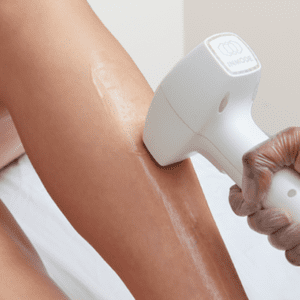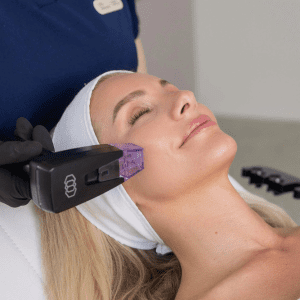
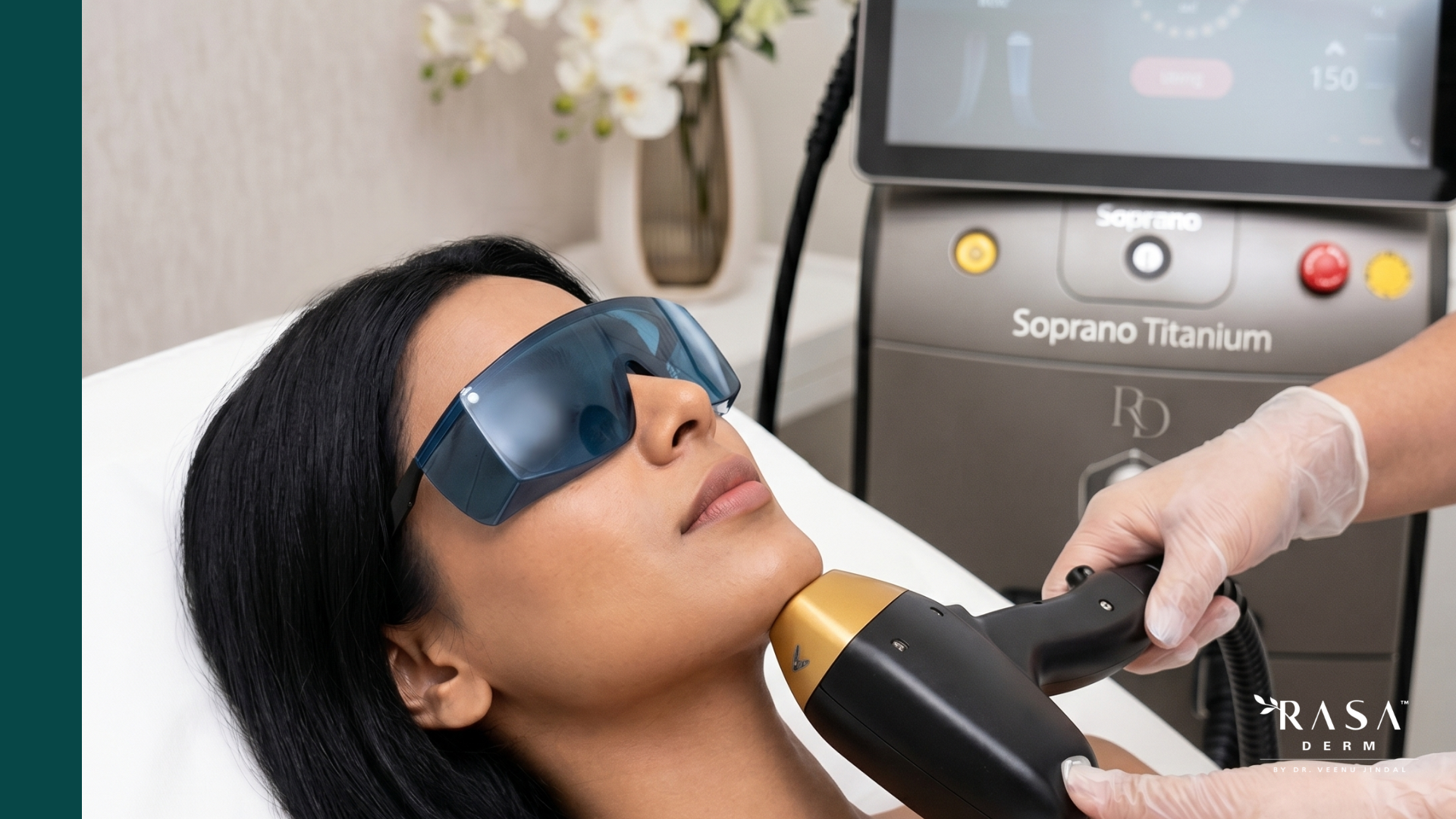
If you have been thinking about laser hair removal but keep putting it off — you are probably not short on reasons. The internet has ensured that for every person who raves about the results, there is a comment thread full of warnings: it burns, it doesn’t work on dark skin, it’s only for women, the hair always comes back, it’s dangerous near the eyes.
Most of these claims are either outdated, misunderstood, or simply untrue. Laser technology has evolved dramatically, and today’s clinical-grade systems are safer, more effective, and more inclusive than the devices of a decade ago.
At RasaDerm, Dr. Veenu Jindal — MD Dermatology, SCE from the Royal College of Physicians, London — addresses these myths directly with her patients every single day. We have compiled the most persistent ones here, along with what the science and clinical evidence actually say.
We also explain how the three advanced laser systems at RasaDerm — the Soprano Titanium Special Edition, InMode Triton, and eRide Laser — are specifically designed to address many of the concerns behind these myths.
Quick Answers: What People Ask Most About Laser Hair Removal
Before we go deep, here are direct answers to the questions that come up most often — structured for those who want the short version first.
1. Is laser hair removal permanent?
Laser hair removal produces long-term, significant reduction in hair growth — not always 100% permanent for every follicle, but most patients achieve 80–95% reduction that lasts years. Occasional maintenance sessions help sustain results.
2. Is laser hair removal safe for Indian skin?
Yes — when the right laser is used. Older lasers posed risks for darker skin tones, but modern systems like Soprano Titanium Special Edition and InMode Triton are specifically engineered with wavelengths and cooling systems that make laser hair removal safe for all Indian skin tones.
3. Is laser hair removal painful?
With modern systems, most patients describe the sensation as mild warmth or a light snap — far more comfortable than waxing. The Soprano Titanium uses a sweeping motion with continuous cooling that makes sessions virtually painless.
4. Does laser hair removal work on all hair types?
It works best on dark, coarse hair. Fine, light, or grey hair responds less effectively because laser targets melanin in the hair follicle. A dermatologist can assess suitability at consultation.
5. How many sessions are needed for laser hair removal?
Typically 6–8 sessions for most body areas, spaced 4–8 weeks apart depending on the area and hair growth cycle. Some patients require additional maintenance sessions annually.
6. Can men get laser hair removal?
Absolutely. Laser hair removal is equally effective for men and growing in popularity for back, chest, beard-line shaping, and body hair management.
The Myths — And What a Dermatologist Actually Says
Myth 1: Laser Hair Removal Is Extremely Painful
The Truth: This is one of the most common reasons people delay laser hair removal — and it’s largely based on experiences with older, first-generation laser systems. Early diode and alexandrite lasers delivered intense single pulses that could feel like a rubber band snap, especially on sensitive areas. Today’s technology is fundamentally different.
The Soprano Titanium Special Edition at RasaDerm uses a unique IN-Motion technology — a gentle sweeping applicator that gradually heats the follicle instead of delivering one-time high-energy pulses.
Combined with a built-in DualChill contact cooling system, most patients describe their sessions as warm and comfortable, not painful. Many fall asleep during full-body treatments.
Pain tolerance varies by individual and body area, but for the vast majority of our patients at RasaDerm, laser hair removal is significantly more comfortable than waxing.
Myth 2: Laser Hair Removal Doesn’t Work on Dark or Indian Skin
The Truth: This myth has a historical basis — it is simply no longer true with modern technology. Older laser systems, particularly the alexandrite laser at 755nm, emitted wavelengths that were strongly absorbed by epidermal melanin.
On darker skin tones (Fitzpatrick IV–VI, which describes most Indian skin), this created a real risk of burns, blistering, and post-inflammatory hyperpigmentation. However, the clinical landscape has changed significantly. The InMode Triton at RasaDerm combines three wavelengths in a single platform — 755nm (alexandrite), 810nm (diode), and 1064nm (Nd:YAG) — allowing the system to be precisely calibrated for individual skin tone and hair type.
The 1064nm wavelength penetrates deeper with less epidermal melanin absorption, making it inherently safer for darker skin. The Soprano Titanium Special Edition further addresses this with its SHR (Super Hair Removal) technology, which uses lower fluences delivered at high frequency — reducing thermal damage risk while maintaining follicular efficacy.
At RasaDerm, all treatments are assessed and calibrated by Dr. Veenu Jindal for each patient’s specific Fitzpatrick type before beginning.
Myth 3: The Hair Always Grows Back — So It’s a Waste of Money
The Truth: This myth conflates two different things: total elimination of every follicle (which is unrealistic for any hair removal method) and long-term significant reduction (which laser achieves very well). Hair follicles exist in three growth phases — anagen (active), catagen (transitional), and telogen (resting).
Laser energy works only on follicles in the active anagen phase, which is why multiple sessions spaced over weeks are required to treat all follicles in a given area through their growth cycles. After a complete course of 6–8 sessions, most patients at RasaDerm achieve 80–95% reduction in hair density and thickness.
The hair that returns, if any, is typically finer and lighter than the original. This is far more than any waxing, threading, or shaving method can claim.
Some patients require one annual maintenance session to address the small percentage of follicles that regenerate — a minor commitment compared to monthly waxing appointments for life.
Myth 4: Laser Hair Removal Is Only for Women
The Truth: Laser hair removal has always been gender-neutral — it simply wasn’t marketed that way for most of its history.
The clinical mechanism does not discriminate. Men are increasingly choosing laser hair removal for back and shoulder hair (which is difficult to manage any other way), chest hair, beard-line definition and ingrown hair prevention, underarms, and upper arms.
Beard and jawline laser shaping is especially popular among men who want cleaner lines without daily shaving and the associated skin irritation. At RasaDerm, we treat a significant number of male patients across all body areas.
The InMode Triton is particularly well-suited for male hair removal because of its ability to handle coarser, denser hair at depth — a common characteristic of male body hair.
Myth 5: Laser Hair Removal Causes Skin Darkening or Damage
The Truth: When performed correctly by a trained dermatologist with appropriate equipment, laser hair removal does not cause skin darkening.
The opposite is often true: patients with chronic ingrown hairs, post-waxing hyperpigmentation, or folliculitis (inflammation from repeated shaving) frequently see their skin tone improve after laser treatment, because the underlying cause of irritation and inflammation — the hair follicle trauma — is eliminated.
The risk of darkening arises when incorrect wavelengths are used for a patient’s skin type, when settings are too aggressive, or when the patient uses the laser on recently sun-exposed skin.
At RasaDerm, every treatment session includes a skin assessment. Patients are advised on sun avoidance protocols before and after sessions, and the laser parameters are adjusted by Dr. Veenu specifically to minimise any epidermal thermal load.
Myth 6: You Can’t Get Laser Hair Removal in Summer
The Truth: The concern behind this myth is legitimate — tanned or recently sun-exposed skin has higher epidermal melanin, which can absorb laser energy and increase burn risk with older systems. However, this does not mean laser hair removal is off the table in summer. It means sun-exposed skin needs to be appropriately managed before treatment.
At RasaDerm, we advise patients to avoid direct sun exposure to the treatment area for 2–4 weeks before each session and to use broad-spectrum SPF consistently. With proper protocols, laser hair removal can be performed year-round.
Modern systems like the Soprano Titanium’s SHR technology further reduce the risk on mildly tanned skin compared to traditional high-fluence lasers.
Myth 7: All Lasers Are the Same — It Doesn’t Matter Where You Go
The Truth: This is perhaps the most dangerous myth of all. Laser hair removal outcomes are determined by three things: the technology, the operator’s expertise, and the clinical assessment preceding treatment.
A clinic using an outdated single-wavelength diode laser cannot deliver the same outcomes or safety profile as one using an InMode Triton or Soprano Titanium Special Edition.
Equally important is who is operating the device. Laser energy delivered at incorrect settings for a patient’s skin type can cause burns, scarring, or hyperpigmentation — risks that are largely eliminated when a qualified dermatologist is overseeing treatment. At RasaDerm, all laser treatments are performed under Dr. Veenu Jindal’s direct supervision.
The decision on which laser system, which wavelength combination, and which parameters to use is made clinically — not by a technician following a generic protocol.
Myth 8: Laser Hair Removal Is Dangerous Near the Bikini or Sensitive Areas
The Truth: Laser hair removal is clinically safe across all body areas, including the bikini line, Brazilian area, underarms, and face — when performed with appropriate technique and equipment.
Eye protection is always used when treating facial areas. The sensitivity concern typically arises from pain expectations (addressed above) rather than safety. Full Brazilian laser hair removal is one of the most requested treatments at RasaDerm.
The Soprano Titanium’s gentle sweeping technology is specifically comfortable for sensitive areas, and the built-in cooling minimises any discomfort during treatment.
Myth 9: You Need to Stop All Hair Removal Before Starting Laser
The Truth: Partially true, but often misunderstood. Before laser hair removal sessions, you must avoid hair removal methods that remove the root — waxing, threading, epilating — because the laser needs the root present in the follicle to destroy it.
However, shaving is not only permitted but often recommended before sessions, as it removes the surface hair so laser energy is concentrated in the follicle rather than the hair shaft above the skin.
Your dermatologist will give you specific pre-session instructions based on the area being treated.
Myth 10: Laser Hair Removal Causes Cancer or Radiation Exposure
The Truth: There is no scientific evidence linking laser hair removal to cancer or harmful radiation. Lasers used in hair removal are non-ionising optical devices — they emit focused light energy, not radiation of the kind produced by X-rays or nuclear sources.
The laser energy interacts only with the melanin in hair follicles and does not penetrate deeply enough to affect internal organs, DNA, or systemic health. This myth likely stems from a general anxiety around the word ‘radiation,’ which is used loosely to describe everything from gamma rays to visible light.
Clinical laser systems used in dermatology are among the most thoroughly tested and regulated medical devices in use today.
The Lasers at RasaDerm: Why Technology Choice Matters
RasaDerm is equipped with three distinct laser platforms for hair removal — each with specific clinical strengths. Understanding the difference helps explain why patients who may have had disappointing results elsewhere achieve significantly better outcomes here.
Soprano Titanium Special Edition
The Soprano Titanium Special Edition represents the current benchmark in pain-free laser hair removal. Its defining feature is SHR (Super Hair Removal) technology, which uses a high-frequency, lower-fluence IN-Motion approach rather than single-pulse high-energy delivery. The applicator is moved across the skin in a sweeping motion, gradually heating the follicle over multiple passes — a process that is both more comfortable and clinically effective.
The Soprano Titanium combines three wavelengths (755nm, 810nm, 1064nm) in a single applicator, allowing the system to target multiple follicle depths simultaneously. Its DualChill contact cooling keeps the skin surface cool throughout treatment, making it appropriate for sensitive areas and suitable for virtually all Fitzpatrick skin types, including darker Indian skin tones. It is also one of the fastest full-body laser systems available — a practical advantage for patients with busy schedules.
InMode Triton
The InMode Triton is a tri-wavelength laser platform that delivers alexandrite (755nm), diode (810nm), and Nd:YAG (1064nm) wavelengths — either individually or in simultaneous combination. This flexibility makes it one of the most versatile clinical tools for laser hair removal across diverse patient profiles.
The Triton’s simultaneous multi-wavelength delivery means the laser can target follicles at different depths within a single pulse, improving efficacy for coarse or deeply rooted hair. For male patients with dense body or back hair, and for areas like the legs with varied hair thickness, the Triton often delivers superior clearance per session. Its 1064nm capability makes it a strong option for darker skin tones where epidermal safety is paramount.
Eride Laser
The eRide Laser is a diode-based system optimised for precision and targeted treatment. It is particularly effective for smaller, defined areas — upper lip, chin, sideburns, brows, and hairline shaping — where controlled application matters more than broad coverage speed. The eRide complements the Soprano Titanium and Triton in RasaDerm’s laser suite, allowing Dr. Veenu to choose the most appropriate system based on body area, hair characteristics, and patient skin type.
Having three distinct laser platforms rather than one gives RasaDerm the ability to truly customise treatment — not just adjust settings on a single device, but select the clinically most appropriate technology for each patient and each area being treated.
What to Expect from Laser Hair Removal at RasaDerm
Knowing what a typical treatment journey looks like removes a lot of the hesitation that comes from the unknown.
Consultation: Every laser hair removal journey at RasaDerm begins with a consultation with Dr. Veenu Jindal. She assesses your skin type, hair characteristics, any hormonal or medical history relevant to hair growth, and your goals — to determine which laser system, how many sessions, and what spacing will work best for you.
Patch Test: Before the first session, a patch test on a small area helps confirm the correct settings and ensure there is no unexpected skin response.
Sessions: Each session targets hair follicles in the active growth phase. Sessions are spaced 4–8 weeks apart depending on the body area. Most patients need 6–8 sessions for significant, lasting reduction.
Aftercare: Post-session care is simple — SPF application, avoiding heat and sun for 24–48 hours, and gentle skincare. Specific aftercare instructions are provided after each session.
Results: Most patients notice visible reduction after the second or third session. By the final session, the majority achieve 80–95% reduction in hair density, with remaining hair finer and lighter than the original.
Laser Hair Removal in Delhi: Start With the Right Information
The myths around laser hair removal have kept many people cycling through waxing, threading, and shaving appointments for years longer than necessary. The reality is that today’s clinical laser systems are safe, effective, and comfortable — particularly when you choose a clinic with the right technology and a qualified dermatologist overseeing your treatment.
At RasaDerm, the combination of Soprano Titanium Special Edition, InMode Triton, and eRide Laser — administered under Dr. Veenu Jindal’s supervision — means your treatment is not a generic protocol. It is a clinical decision made for your skin, your hair, and your goals.
Ready to move past the myths? Book a consultation at RasaDerm, Ashok Vihar or Safdarjung Enclave, Delhi — and find out exactly what laser hair removal can do for you.