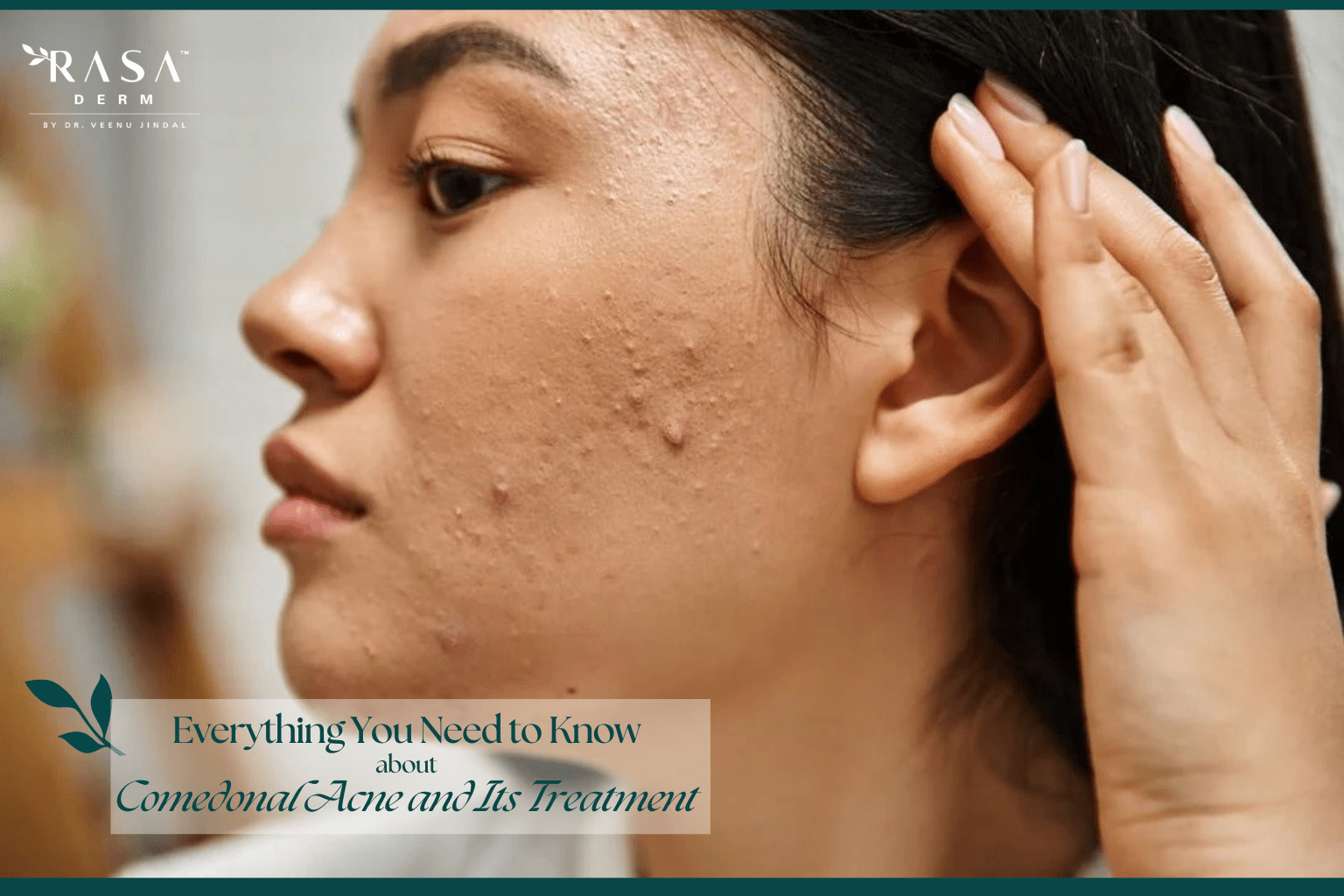
Comedonal Acne: The “Silent” Acne Behind Persistent Skin Bumps
There is a certain type of acne that doesn’t peel painfully or look filled with pus. It doesn’t look swollen or cystic. You feel that it isn’t popping or increasing and/or sitting on your cheek or chin or forehead, and you think.
Why is my skin suddenly feeling all bumpy? Why won’t this texture smooth out? And why do these whiteheads never leave?
If that sounds familiar, you are likely dealing with comedonal acne—a slower, quieter form of acne that often gets ignored until it spreads or turns inflamed.
At Rasa Derm, I see this every single week. Patients walk in saying,
“It’s not acne. It’s just tiny bumps. Why won’t they go away?”
And my answer is always the same:
“This is acne. Just a different kind—and we can fix it.”
Let’s dive in and make it simple for you so you know how to deal with it.
What Is Comedonal Acne
Let me explain with an example that your pores are tiny doorways. When dead skin and sebum (the oil) collect together at the doorway and get stuck on the door, not passing from the doorway, the door gets stuck. And that little blockage becomes:
- Whiteheads—Small, skin-colored bumps under the surface.
- Blackheads—When that plug gets exposed to air and turns dark.
No pus. No drama. Just an annoying rough surface and clogged pores that don’t behave.
What It Looks Like In Daily Life
If you have comedonal acne, you probably recognise these situations:
- Your foundation looks uneven even if the shade is right.
- Your forehead looks “grainy” in sunlight.
- You feel bumps along your jawline when you run your fingers across.
- You double-clean, apply activities… Yet things aren’t fully clear.
- Some days your skin feels “bumpy but dry” at the same time.
This is why many people misunderstand it as “texture issues.” It isn’t. It’s acne.
Thinking About Why This Happens (Don’t Blame Your Face-Washing Skills.)
Three main reasons:
- Your skin is shedding cells, but they are not exiting properly: Think of it as a traffic jam inside a pore.
- Oil mixes with those trapped cells: That sticky mixture blocks pores—silently.
- Something in your routine is clogging you up. This includes:
- Heavy moisturisers and oils.
- Thick sunscreens.
- Sleeping with makeup.
- Over-exfoliating (yes—too much “active skincare” backfires).
Sweat, pollution, and hormones add fuel to the fire, but the root is congestion and barrier imbalance.
Simple, but most people miss it because they jump to scrubs and “clean girl” skincare hacks that only irritate the skin further.
How We Treat Comedonal Acne At Rasa Derm
The treatment is not something super complicated—it needs to be dermatologist-guided so it’s gentle on your skin, needs to be consistent for better results, and needs to be tailored to your skin type.
List Of In-Clinic Treatments That Work Very Well
- Medical-grade peels: They loosen those sticky dead cells gradually. Not harsh, not stripping. Just clean, even resurfacing.
- Acne-focused medifacials: Think of them as deep cleaning for pores, but medically designed (not a salon facial).
- Professional extractions: Done safely, only where needed. No Pinterest extraction tools at home.
- Correct skincare:Very often, I switch patients from “10-step product cocktail” to 3–4 products that actually work with the skin—not against it.
- Retinoids and azelaic acid, used correctly: Not everyone needs tretinoin right away. Sometimes we start slow. Sometimes we buffer. Sometimes we patch-test for two weeks first.
- Sometimes we patch-test for two weeks first. Why?: Because your skin barrier deserves some respect. And yes, occasionally there’s a hormonal component—in that case, we address that too.
A routine I Often Recommend
Morning:
- Gentle gel cleanser.
- Niacinamide or a mild salicylic acid serum.
- Non-comogedenic moisturiser.
- Sunscreen (a gel-based, not a thick-textured cream, and especially non-comedogenic).
Night:
- Cleanser.
- Retinol or azelaic acid (as your dermatologist recommends don’t start yourself).
- Ceramide-based barrier repair cream.
And Once A Week:
- Clay mask.
- Gentle PHA exfoliation (not scrubs).
Keep It Simple That’s The Key
You don’t need 20-odd products like toner, scrubs, ice globes, or kitchen experiments; please stay away.
How Long Will It Take To See The Results
With Consistency:
- 4–6 Weeks: bumps soften.
- 2–3 Months: texture looks clearer.
- 3–6 Months: skin stabilises and glows.
We don’t rush the skin. We heal it.
The Human Side Of This
Comedonal acne can quietly affect confidence because the skin never feels truly smooth. And you might think you’re doing everything right—double cleansing, serums, masks—yet the bumps stay.
Here’s The Truth:
It’s not your fault. You didn’t choose the wrong routine. Your skin simply needs a little structure, a little patience, and ingredients used in the right order and percentage.
Good skin isn’t about doing more. It’s about doing what your skin responds to.
Final Word
Comedonal acne is one of the most treatable forms of acne—when approached correctly.
No shortcuts. No over-scrubbing. No panic buying products.
A personalized plan always works better than guessing.